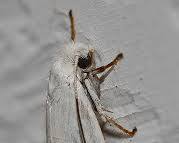
Yucca Moths
Yucca Moths (Tegeticula spp.) are small moths famous for their unique and highly specialized relationship with Yucca plants (Yucca spp.). Unlike most insects that simply feed on plants, Yucca Moths and Yucca plants depend upon each other for survival. This remarkable partnership is considered one of the best-known examples of obligate mutualism, meaning neither species can successfully reproduce without the other.
Although occasionally referred to as Yucca Wasps, these insects are true moths and have no relationship to wasps. The nickname likely originates from the female’s unusual pollen-collecting appendages, which are sometimes mistaken for a stinger. While the relationship benefits both organisms, the moth larvae consume a portion of the developing seeds within the yucca fruit, creating a controlled level of seed loss.
Scientists have studied Yucca Moths extensively because they provide valuable insight into coevolution, pollination biology, and ecological specialization.
Taxonomy and Classification
- Kingdom: Animalia
- Phylum: Arthropoda
- Class: Insecta
- Order: Lepidoptera
- Family: Prodoxidae
- Genus: Tegeticula
Yucca Moths undergo complete metamorphosis with egg, larval, pupal, and adult stages. Their close association with yucca plants has evolved over millions of years, resulting in one of nature’s most specialized plant-insect relationships.
Identification
Adult Yucca Moths are relatively small and inconspicuous compared to many ornamental moth species.
- Wingspan: Approximately 15–25 mm.
- Color: White, cream, or pale tan.
- Body: Slender and lightly covered with scales.
- Activity: Primarily nocturnal.
- Female Adaptation: Specialized tentacle-like mouthparts used to collect and transport pollen.
The larvae are rarely observed because they develop inside yucca seed capsules.
- Color: Creamy white.
- Body: Soft and cylindrical.
- Habitat: Inside developing yucca fruits.
Unlike many moth pests, Yucca Moths cause very little visible damage to the host plant.
Distribution and Habitat
Yucca Moths occur throughout North America wherever yucca plants naturally grow or are cultivated.
Common habitats include:
- Desert grasslands
- Arid scrublands
- Rocky hillsides
- Prairies
- Southwestern deserts
- Residential landscapes
- Botanical gardens
The distribution of Yucca Moths closely mirrors the distribution of their host plants.
Life Cycle
The life cycle of Yucca Moths is synchronized with the flowering period of yucca plants.
- Adult Emergence: Moths emerge when yucca flowers begin to bloom.
- Pollen Collection: Females gather pollen from one flower using specialized mouthparts.
- Pollination: The female deliberately places pollen onto the stigma of another flower.
- Egg Laying: Eggs are deposited inside the flower’s ovary.
- Larval Development: Larvae feed on a portion of developing seeds.
- Pupation: Mature larvae leave the fruit and enter the soil to pupate.
- Adult Emergence: New adults emerge to repeat the cycle.
This carefully balanced process ensures successful reproduction for both the plant and the insect.
Behavior and Ecology
Yucca Moths exhibit behaviors rarely seen in other pollinating insects.
Active Pollination
Most pollinators transfer pollen accidentally while feeding. Yucca Moths actively collect pollen, shape it into a compact ball, and deliberately place it onto the stigma of another flower.
This behavior represents one of the only known examples of intentional pollination by an insect.
Seed Consumption
After pollination, the female lays eggs inside the flower.
When larvae hatch, they feed on some of the developing seeds. Importantly, they consume only a fraction of the seeds, allowing the plant to successfully reproduce.
Mutual Dependence
The moth relies entirely on yucca plants for reproduction, while many yucca species rely almost exclusively on Yucca Moths for pollination.
This creates a delicate ecological balance.
Damage and Economic Importance
Unlike most insects featured on Pestipedia, Yucca Moths are not considered serious pests.
Seed Predation
The primary impact involves consumption of developing seeds.
- Partial seed loss.
- Small feeding holes in seed capsules.
- Reduced total seed production.
Minimal Plant Injury
The moths do not:
- Defoliate leaves.
- Bore into stems.
- Damage roots.
- Cause plant death.
Most yucca plants tolerate larval feeding without any measurable reduction in health.
Signs of Presence
Indicators of Yucca Moth activity include:
- Successfully pollinated yucca flowers.
- Developing seed capsules.
- Small holes within mature fruits.
- Larvae inside seed pods.
- Adult moths visiting flowers at night.
The presence of seed capsules often indicates successful moth pollination.
Behavior and Conflict
The relationship between Yucca Moths and Yucca plants represents a biological trade-off.
- Benefit: Reliable pollination.
- Cost: Partial seed consumption.
- Result: Successful reproduction for both species.
If larvae consume too many seeds, the plant may abort the fruit entirely, preventing the moth from completing development. This natural mechanism helps maintain balance within the relationship.
Management and Prevention
Management is generally unnecessary and not recommended.
Toleration
- Allow natural pollination to occur.
- Protect flowering yucca plants.
- Avoid insecticide applications during bloom periods.
- Preserve native pollinator populations.
Eliminating Yucca Moths can severely reduce seed production and reproduction of native yucca plants.
Landscape Management
Gardeners growing ornamental yuccas should recognize the ecological value of these insects and avoid unnecessary control efforts.
Conservation and Research
Yucca Moths are among the most important model organisms used in studies of coevolution and mutualism. Researchers continue to investigate the behavioral, chemical, and genetic mechanisms that allow both species to maintain this highly specialized relationship.
Current studies focus on pollination efficiency, host specificity, climate change impacts, and the evolutionary processes that prevent either organism from exploiting the other excessively.
Yucca Moths remain one of nature’s most fascinating examples of cooperation between plants and insects. Although the larvae consume some seeds, their role as pollinators makes them essential partners in the continued survival and reproduction of yucca plants throughout North America.