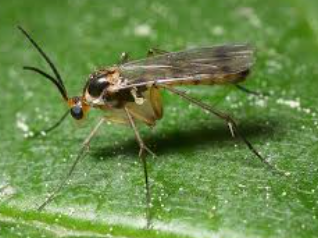
X-Rated Pests is an informal nickname sometimes given to particularly unsettling pests because of their appearance, behavior, or reproductive habits. One of the most common examples is the Fungus Gnat (Family Sciaridae), a tiny fly frequently found around houseplants, greenhouses, and indoor growing environments. While the adult flies are primarily a nuisance, the larvae can damage plant roots, stunt growth, and contribute to the spread of plant diseases.
Fungus Gnats are among the most common pests encountered in potted plants. Their presence is often associated with excessive soil moisture, overwatering, and the accumulation of organic matter. In severe infestations, hundreds of adults may emerge from the soil, creating a persistent annoyance indoors.
Perhaps the most startling behavior associated with certain fungus gnat species is the formation of large masses of larvae that move together across soil surfaces or floors. These writhing “larval snakes” can contain hundreds or even thousands of individuals and are often the source of the pest’s unusual nickname.
Taxonomy and Classification
- Kingdom: Animalia
- Phylum: Arthropoda
- Class: Insecta
- Order: Diptera
- Family: Sciaridae
Fungus Gnats undergo complete metamorphosis with egg, larval, pupal, and adult stages. Their development is closely tied to moisture and fungal growth within the soil.
Identification
Adult Fungus Gnats are tiny, mosquito-like flies commonly seen hovering around houseplants.
- Size: 1–5 mm long.
- Color: Dark gray to black.
- Body: Slender and delicate.
- Wings: Transparent with visible veins.
- Flight: Weak, fluttering flight near soil surfaces.
The larvae are the damaging stage.
- Color: Clear to creamy white.
- Head: Distinct shiny black head capsule.
- Body: Legless and translucent.
- Habitat: Upper layers of moist soil.
The dark head capsule is one of the most reliable identification features of fungus gnat larvae.
Distribution and Habitat
Fungus Gnats occur worldwide and are especially common indoors where potted plants are maintained year-round.
Common habitats include:
- Houseplants
- Greenhouses
- Nurseries
- Indoor gardens
- Propagation trays
- Hydroponic systems
- Areas with excessive moisture
They thrive in damp soils rich in organic matter and fungal growth.
Life Cycle
The life cycle is relatively short and may be completed in as little as two to four weeks.
- Egg Stage: Females lay eggs in moist soil.
- Larval Stage: Larvae feed on fungi, decaying organic matter, and plant roots.
- Pupal Stage: Pupation occurs within the soil.
- Adult Stage: Adults emerge and begin mating shortly after.
Warm temperatures and consistently moist soil accelerate development and population growth.
Damage and Economic Importance
The primary damage is caused by the larval stage.
Root Feeding
Larvae consume root hairs and tender root tissue.
- Reduced nutrient uptake.
- Reduced water absorption.
- Poor plant establishment.
- Stunted growth.
Seedling Damage
Young plants are particularly vulnerable.
- Wilting seedlings.
- Poor germination.
- Stem collapse.
- Plant death in severe infestations.
Disease Transmission
Fungus Gnat larvae can spread important plant pathogens.
- Pythium
- Fusarium
- Rhizoctonia
- Other root-rot organisms
Nuisance Problems
Adult gnats often become a significant annoyance.
- Flying around indoor plants.
- Gathering near windows.
- Accumulating around lights.
- Contaminating workspaces.
Signs of Infestation
Common indicators include:
- Small black flies near plants.
- Larvae visible in soil.
- Wilting plants despite watering.
- Stunted growth.
- Yellowing foliage.
- Adult flies caught on sticky traps.
Heavy infestations may produce visible masses of larvae moving across the soil surface.
Behavior and Conflict
The relationship between Fungus Gnats and moisture is central to their pest status.
- Overwatering Indicator: Infestations often signal excessive watering.
- Rapid Reproduction: Populations increase quickly under ideal conditions.
- Disease Vectoring: Larvae spread fungal pathogens.
- Indoor Nuisance: Adults frequently invade living spaces.
Because larvae cannot survive in dry soil, moisture management is the foundation of control efforts.
Management and Prevention
Integrated Pest Management (IPM) provides the most effective long-term control.
Moisture Management
- Allow the top inch of soil to dry between waterings.
- Improve drainage.
- Avoid standing water.
- Reduce excessive humidity.
This is often the most effective control method.
Physical Controls
- Apply a layer of coarse sand over soil.
- Use diatomaceous earth.
- Install yellow sticky traps.
- Replace heavily infested potting soil.
Biological Control
Several beneficial organisms provide excellent control.
- Beneficial Nematodes: Steinernema feltiae
- Predatory Mites: Stratiolaelaps scimitus
- Microbial Controls: Bacillus thuringiensis israelensis (Bti)
Sanitation
- Remove decaying plant material.
- Clean growing areas regularly.
- Discard heavily infested plants when necessary.
Conservation and Research
Research continues to focus on improving greenhouse management practices, reducing disease transmission, and developing growing media that discourage fungus gnat development. Scientists are also evaluating biological control agents that can provide effective suppression without the use of conventional insecticides.
Although Fungus Gnats are small insects, they can become major pests in homes, greenhouses, and nurseries when moisture conditions favor their development. Proper watering practices, biological controls, and early detection remain the most effective tools for managing these persistent indoor plant pests.