Overview
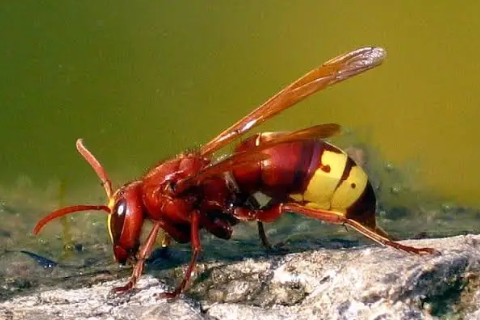
Vini Wasps most commonly refers to the Oriental Wasp (Vespa orientalis), a large social wasp belonging to the hornet genus Vespa. Native to parts of Southern Europe, the Mediterranean region, the Middle East, North Africa, and Asia, this species is well adapted to hot, dry climates and has become a significant pest in both urban and agricultural environments.
Oriental Wasps are known for their powerful mandibles, aggressive scavenging behavior, and painful sting. Unlike many other wasp species that become most active during cooler parts of the day, Oriental Wasps often remain highly active during intense summer heat. They frequently visit outdoor dining areas, garbage containers, food markets, orchards, and agricultural sites in search of protein and sugar sources.
These wasps provide some ecological benefits by preying on flies, caterpillars, and other insects, but they are often considered pests because of their tendency to invade human spaces, prey on honey bees, and establish large colonies near buildings. In apiaries, they can cause substantial economic losses by attacking honey bee colonies and consuming brood, honey, and adult bees.
The combination of agricultural damage, public health concerns, and nuisance behavior makes the Oriental Wasp one of the more significant social wasp pests in regions where it occurs.
Taxonomy and Classification
- Kingdom: Animalia
- Phylum: Arthropoda
- Class: Insecta
- Order: Hymenoptera
- Family: Vespidae
- Genus: Vespa
- Species: Vespa orientalis
The Oriental Wasp belongs to the same family as yellowjackets, paper wasps, and hornets. Like other social wasps, colonies consist of a reproductive queen, sterile female workers, and male reproductive individuals. Colonies are annual, with only newly mated queens surviving winter to establish new nests the following season.
Physical Description
Adult Oriental Wasps are large, robust insects that typically measure between 20 and 30 millimeters in length. Queens are generally larger than workers and may exceed 35 millimeters.
- Adult Appearance: The body is predominantly reddish-brown to dark chestnut in color.
- Distinctive Markings: A bright yellow band crosses the second abdominal segment, and a yellow patch is usually visible on the face and head.
- Wings: Wings are amber or smoky brown and fold lengthwise when at rest.
- Mandibles: Strong jaws are used for prey capture, nest construction, and scavenging.
- Sting: Females possess a smooth stinger and can sting repeatedly without losing it.
Unlike bees, Oriental Wasps do not die after stinging. Multiple stings may occur if the insect feels threatened or if a nest is disturbed.
Distribution and Habitat
The Oriental Wasp is naturally distributed throughout the Mediterranean basin, Southern Europe, North Africa, the Middle East, Central Asia, and parts of India. In recent years, isolated populations have been reported in additional regions through accidental transportation and trade.
Preferred habitats include:
- Dry grasslands
- Semi-arid regions
- Agricultural fields
- Orchards and vineyards
- Urban environments
- Food markets and commercial districts
- Residential neighborhoods
They thrive in areas where food, water, nesting sites, and human activity are abundant. Urban environments often provide all of these resources in close proximity.
Nesting Behavior
One of the defining characteristics of Oriental Wasps is their tendency to build nests underground. Colonies commonly occupy abandoned rodent burrows, natural soil cavities, irrigation voids, retaining wall gaps, and underground chambers.
However, they may also nest in:
- Wall voids
- Building foundations
- Attics
- Tree hollows
- Rock crevices
- Utility boxes
The nests are constructed from paper-like material created by chewing wood fibers and mixing them with saliva. Mature colonies may contain hundreds or even thousands of workers during peak season.
Behavior and Feeding
Oriental Wasps are opportunistic feeders and exhibit both predatory and scavenging behaviors. Their diet changes depending on colony needs and food availability.
Adult workers commonly feed on:
- Fruit juices
- Ripening fruit
- Nectar
- Honey
- Sugary beverages
- Food waste
- Meat scraps
- Fish remains
Workers also hunt insects to provide protein for developing larvae. Common prey includes flies, caterpillars, grasshoppers, beetles, and honey bees.
Unlike many wasp species that reduce activity during extreme heat, Oriental Wasps remain highly active during the hottest parts of the day, giving them a competitive advantage in arid environments.
Impact and Conflict
The Oriental Wasp creates several significant conflicts with humans and agriculture.
Public Health Concerns
These wasps frequently visit outdoor dining areas, garbage containers, parks, and food markets. Their large size and defensive behavior can create concern among the public. Their sting is painful and may cause severe allergic reactions in sensitive individuals.
Agricultural Damage
Oriental Wasps often feed on ripe fruit, causing direct crop losses in orchards and vineyards. Damaged fruit becomes more susceptible to rot and secondary pest infestations.
Apiary Predation
Beekeepers consider Oriental Wasps one of the most problematic predators of honey bee colonies. Workers may attack hives repeatedly, killing guard bees and carrying off brood to feed developing larvae.
Large wasp populations can weaken colonies, reduce honey production, and contribute to colony losses.
Life Cycle
The colony begins each spring when a fertilized queen emerges from overwintering shelter and starts constructing a new nest. She lays the first generation of eggs and cares for the larvae until workers emerge.
Once workers take over nest duties, the queen focuses exclusively on reproduction. Colony populations increase throughout spring and summer, reaching peak size during late summer and early autumn.
At the end of the season, new queens and males are produced. After mating, queens seek overwintering sites while workers and the old queen eventually die as temperatures decline.
Management and Prevention
Managing Oriental Wasps requires a combination of exclusion, sanitation, trapping, and professional nest treatment when necessary.
Sanitation
- Keep garbage containers tightly closed.
- Remove fallen fruit promptly.
- Clean outdoor eating areas regularly.
- Eliminate exposed food sources.
Exclusion
- Seal cracks and wall voids.
- Repair damaged vents and screens.
- Close openings around utility lines.
- Inspect foundations for potential nesting sites.
Trapping
Protein-based traps using meat or fish can help reduce local populations, particularly early in the season when queens are establishing colonies.
Professional Control
Large colonies, especially underground nests, should be treated by licensed pest management professionals. Specialized insecticide dusts or foams are often applied directly into nest entrances to eliminate the colony safely.
Research and Conservation
Research on Oriental Wasps focuses on improving management methods while minimizing impacts on beneficial insects. Scientists are studying species-specific attractants, improved trapping systems, and environmentally responsible control techniques.
Researchers are also interested in the remarkable heat tolerance of Oriental Wasps, which allows them to remain active under conditions that limit many other insect species.
Conclusion
The Oriental Wasp is a highly adaptable social hornet known for its predatory behavior, scavenging habits, and ability to thrive in hot climates. While it provides some ecological benefits through insect predation, it is often regarded as a pest because of its painful sting, attraction to human food sources, fruit damage, and attacks on honey bee colonies.
Effective management relies on sanitation, exclusion, trapping, and professional nest removal when necessary. Understanding the biology and behavior of Oriental Wasps helps reduce conflicts while improving public safety and protecting agricultural resources.