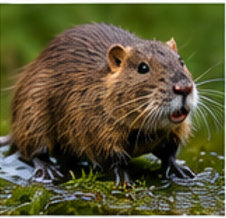
Nutria (Myocastor coypus), also known as coypu, are large, semi-aquatic rodents native to South America that have become destructive invasive pests in several parts of the world. Originally transported to other countries for the fur industry, nutria escaped or were released from captivity and established breeding populations in wetlands, rivers, drainage systems, agricultural areas, and coastal marshes.
Nutria are particularly damaging because they combine heavy feeding on aquatic vegetation with extensive burrowing. Large populations can strip wetlands of vegetation, accelerate shoreline erosion, damage crops, and weaken levees, canal banks, pond edges, and other water-control structures. In heavily affected habitats, nutria can contribute to the conversion of vegetated marsh into open water or exposed mud.
Taxonomy and Classification
Nutria belong to the order Rodentia and are the only living species in the genus Myocastor. Although their aquatic lifestyle can cause them to be confused with muskrats or small beavers, nutria have several distinctive characteristics.
- Kingdom: Animalia
- Phylum: Chordata
- Class: Mammalia
- Order: Rodentia
- Family: Myocastoridae
- Genus: Myocastor
- Species: Myocastor coypus
Nutria are rodents and therefore possess continuously growing incisors. Like other rodents, they must regularly gnaw and feed to wear these teeth down.
Identification and Physical Description
Adult nutria are substantially larger than most rats and can reach approximately 12 to 20 pounds, with some individuals becoming considerably heavier. Their thick bodies, aquatic behavior, and brown fur can initially make them look like muskrats or small beavers.
- Body: Heavy, cylindrical, and covered with coarse brownish outer fur.
- Tail: Long, round, sparsely haired, and rat-like rather than flattened like a beaver’s tail.
- Incisors: Large and conspicuously orange.
- Hind Feet: Partially webbed and adapted for swimming.
- Front Feet: Smaller and capable of grasping vegetation while feeding.
- Head: Broad with relatively small ears.
- Whiskers: Long and conspicuous, often appearing pale or white.
The combination of a round tail, orange incisors, webbed hind feet, and large body is particularly useful when distinguishing nutria from other semi-aquatic mammals.
Nutria vs. Muskrats and Beavers
Nutria are frequently mistaken for muskrats and beavers because all three spend considerable time around water.
Beavers are generally larger and possess a broad, flat, paddle-shaped tail. Nutria instead have a long, cylindrical tail. Muskrats are considerably smaller and usually have a laterally flattened tail rather than the round tail characteristic of nutria.
The nutria’s bright orange front teeth provide another useful identification feature when the animal is observed at close enough range.
Distribution and Habitat
Nutria originated in South America but were transported internationally for commercial fur production. Escaped and released animals subsequently established populations outside their natural range.
They are strongly associated with aquatic environments, including:
- Freshwater marshes
- Coastal wetlands
- Swamps
- Ponds and lakes
- Slow-moving rivers
- Drainage ditches
- Irrigation canals
- Retention ponds
- Agricultural waterways
Nutria generally prefer locations with abundant vegetation and soft banks suitable for burrowing. Human-created drainage and irrigation systems can therefore provide excellent habitat.
Behavior and Activity
Nutria are excellent swimmers and spend much of their time in or immediately adjacent to water. They may be active during the day, but activity frequently increases during the evening and nighttime hours, particularly where animals experience regular human disturbance.
They create trails between feeding areas, resting sites, and water. Frequently used entry points may develop into obvious slides along muddy banks.
Nutria may construct resting platforms from vegetation, but one of their most damaging behaviors is burrowing into banks and embankments. Burrows provide shelter and protection but can weaken structures designed to retain or channel water.
Life Cycle and Reproduction
Rapid reproduction contributes significantly to the invasive success of nutria. Under favorable environmental conditions, females can reproduce throughout much of the year and may produce multiple litters annually.
Young nutria are unusually well developed at birth compared with many rodents. They are born with fur and open eyes and become mobile quickly. Young animals can begin swimming and feeding on vegetation at an early age.
This reproductive capacity means that small surviving populations can recover relatively quickly after incomplete control efforts. Effective nutria management therefore requires continued monitoring after the initial population reduction.
Feeding Habits
Nutria are primarily herbivorous. They feed heavily on aquatic and semi-aquatic vegetation and frequently target the most nutritious portions of plants.
Their diet can include:
- Roots
- Rhizomes
- Tubers
- Stems
- Leaves
- Young shoots
- Aquatic vegetation
- Agricultural crops
One of the most damaging aspects of nutria feeding is that they often uproot entire plants to consume underground portions. Removing roots and rhizomes prevents vegetation from recovering quickly and leaves exposed soil vulnerable to erosion.
Wetland and Environmental Damage
Nutria can cause severe ecological damage when populations become dense. Healthy marsh vegetation helps stabilize sediment, reduce erosion, provide wildlife habitat, and protect shorelines.
Repeated nutria feeding can remove both above-ground vegetation and underground root systems. Once the root network disappears, wetland soil becomes increasingly vulnerable to wave action and erosion.
Major environmental impacts can include:
- Loss of Marsh Vegetation: Intensive grazing can create large areas of bare soil.
- Accelerated Erosion: Removal of roots reduces soil stability.
- Habitat Loss: Birds, fish, amphibians, and other wildlife may lose important cover and feeding habitat.
- Wetland Conversion: Persistent damage can contribute to vegetated marsh becoming mudflat or open water.
- Competition: Nutria may compete with native wildlife for food and habitat resources.
Agricultural Damage
Nutria living near agricultural areas may leave waterways to feed on crops. Damage is often greatest in fields located close to canals, ponds, marshes, or drainage systems.
Depending on the region, susceptible crops can include rice, sugarcane, corn, vegetables, and other cultivated plants. Nutria may consume seedlings, stems, roots, and mature vegetation.
Large populations can repeatedly enter the same fields, producing localized but economically significant crop losses.
Burrowing and Structural Damage
Nutria do not only damage vegetation. Their burrowing can create significant problems for water-management infrastructure.
Burrows constructed in banks may weaken:
- Levees
- Dikes
- Canal banks
- Pond embankments
- Drainage systems
- Roadside banks
- Irrigation structures
Extensive burrow networks can undermine soil and contribute to erosion, slumping, leakage, or collapse. Damage can become particularly expensive when nutria occupy engineered waterways or agricultural irrigation systems.
Signs of a Nutria Infestation
Because nutria are often most active around water and may remain concealed in dense vegetation, property owners should look for physical evidence of their presence.
- Burrow Entrances: Openings along pond, canal, river, or marsh banks.
- Feeding Damage: Cut, uprooted, or heavily grazed aquatic plants.
- Bare Areas: Patches where vegetation and roots have been removed.
- Slides: Smooth trails running between land and water.
- Tracks: Footprints showing the distinctive hind feet.
- Droppings: Cylindrical feces around trails, feeding sites, or resting areas.
- Crop Damage: Feeding concentrated near waterways.
Repeated sightings during daylight can also indicate that a substantial local population is present.
Health and Safety Concerns
Nutria are generally wary of people and usually attempt to escape rather than confront humans. However, they are wild animals with powerful incisors and may bite if trapped, cornered, or handled.
Nutria can also harbor parasites and disease-causing organisms. People should avoid direct contact with live animals, carcasses, feces, or contaminated water and should keep pets away from trapped or injured nutria.
Management and Control
Nutria management requires an Integrated Pest Management (IPM) approach that combines population monitoring, habitat management, exclusion, and legal removal methods where appropriate.
Monitoring
Determine where nutria are feeding, traveling, and burrowing before beginning control. Tracks, slides, droppings, damaged vegetation, and burrow entrances can reveal areas of concentrated activity.
Habitat Modification
Reducing unnecessary dense vegetation around artificial ponds, drainage channels, and other managed waterways can make some locations less attractive. However, vegetation removal should be carefully planned in natural wetlands because excessive clearing can itself cause erosion and habitat loss.
Exclusion and Bank Protection
Fencing or protective barriers may help protect small, high-value areas. Banks vulnerable to burrowing may require reinforcement using appropriate erosion-control or engineering methods.
Population Removal
Trapping is commonly used in nutria management programs. Large-scale infestations may require coordinated removal across an entire watershed or wetland rather than isolated control on individual properties.
Wildlife laws and permitted control methods vary by location. Property owners should check state and local regulations or consult wildlife-management professionals before trapping or removing nutria.
Why Long-Term Monitoring Is Important
A major challenge with nutria management is their ability to reproduce quickly and recolonize suitable habitat. Removing most animals while leaving a small breeding population can allow numbers to increase again.
Successful programs therefore continue surveillance after populations appear to have been eliminated. Fresh tracks, new burrows, feeding damage, or camera observations can indicate that surviving or newly arriving animals remain.
Conservation and Research
Nutria management is closely connected with wetland conservation and restoration. Researchers study population movement, reproductive biology, habitat use, detection methods, and strategies for removing invasive populations while minimizing disturbance to native wildlife.
Areas where nutria populations have been substantially reduced or eradicated demonstrate that damaged wetlands can recover when feeding pressure is removed and native vegetation is given an opportunity to regenerate.
Continued research is particularly important because nutria damage can interact with other threats facing wetlands, including erosion, land subsidence, invasive plants, development, and changing water conditions.
Conclusion
Nutria (Myocastor coypus) are much more than oversized aquatic rodents. Where they occur as an invasive species, their combination of rapid reproduction, intensive plant feeding, and destructive burrowing can create serious problems for wetlands, agriculture, drainage systems, and water-control infrastructure.
The most recognizable features include their large brown body, long round tail, webbed hind feet, and bright orange incisors. Signs such as stripped vegetation, shoreline burrows, slides, tracks, and damaged crops can reveal an established population.
Effective control requires more than removing individual animals. Long-term nutria management depends on monitoring, habitat protection, population reduction, structural prevention, and continued surveillance for reinvasion. In sensitive wetlands, coordinated management can protect native vegetation and help damaged ecosystems recover.