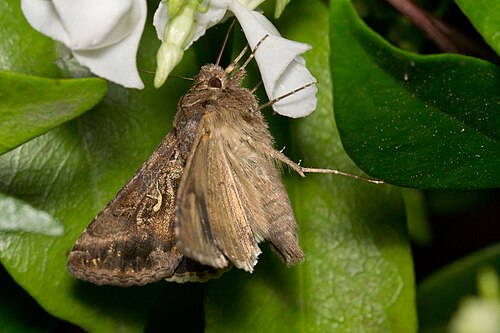
Moths are winged insects in the order Lepidoptera, the same scientific order that includes butterflies. Found on nearly every continent, moths range from tiny species barely visible to the naked eye to giant silk moths with wingspans wider than a human hand. Scientists have described more than 160,000 moth species worldwide, and researchers continue to discover more each year.
Most people associate moths with nighttime activity and porch lights, but plenty of species fly during the day. Many moths go completely unnoticed because their coloring blends in with bark, soil, or dead leaves. While the majority of moths are harmless, a handful of species cause real damage to crops, gardens, stored food, and fabric — which is why correct identification matters before deciding on a control approach.
Taxonomy and Classification
The name Lepidoptera translates roughly to “scale wing,” referring to the microscopic scales that coat the wings of every moth and butterfly and produce their color and pattern.
- Kingdom: Animalia
- Phylum: Arthropoda
- Class: Insecta
- Order: Lepidoptera
Several moth families are especially relevant to homeowners and growers, including Noctuidae (cutworms and armyworms), Tortricidae (leafrollers), Pyralidae (pantry pests), Tineidae (clothes moths), and Saturniidae (giant silk moths).
Moths vs. Butterflies: What’s the Difference?
There’s no single trait that separates every moth from every butterfly, but a few general patterns hold true most of the time:
- Antennae: Moths tend to have feathery or thread-like antennae; butterflies usually have club-tipped antennae.
- Wing position at rest: Moths often rest with wings flat or tented over the body, while butterflies hold theirs upright.
- Body shape: Moths are generally stockier and fuzzier.
- Activity period: Most moths fly at night; most butterflies fly by day.
- Pupal stage: Moths frequently spin silk cocoons; butterflies typically form a hard, exposed chrysalis.
Exceptions exist on both sides, so these should be treated as helpful clues rather than strict rules.
Physical Traits
A moth’s body is divided into a head, thorax, and abdomen, with six legs and two pairs of scale-covered wings attached to the thorax. Large compound eyes help detect motion and low light, and many species have a coiled proboscis for drinking liquids. When handled, moth wings can shed a fine, powdery dust — that’s the loosened scales.
Camouflage and Defense
Camouflage is one of the moth’s primary survival tools. Wing patterns can mimic bark, lichen, dead leaves, or even bird droppings. Some species use bold hindwing colors or large eyespots to startle predators when disturbed, buying just enough time to escape.
Life Cycle
Like butterflies, moths go through complete metamorphosis in four stages: egg, larva, pupa, and adult.
Egg
Females lay eggs on or near a food source appropriate for the larvae — leaves, bark, stored grain, wool, or soil, depending on the species.
Larva (Caterpillar)
This is the feeding and growth stage, and the one responsible for nearly all moth-related damage. Caterpillars have a hardened head capsule, chewing mouthparts, and both true legs and fleshy prolegs. They molt repeatedly as they grow, feeding on anything from leaves and grain to wool and feathers depending on the species.
Pupa
Many species spin a silk cocoon; others pupate in rolled leaves, bark crevices, or underground. No feeding occurs during this transformation stage.
Adult
Adults emerge, expand their wings, and search for a mate. Some feed on nectar or sap using a coiled proboscis; others have no functional mouthparts at all and live entirely off energy stored during the caterpillar stage. Adult lifespans range from a few days to several months.
Why Are Moths Attracted to Light?
No single theory fully explains this behavior, but the leading idea is that artificial light disrupts navigation systems that evolved around consistent, distant light sources like the moon. Moths may get caught in repeating flight loops around bulbs or mistake bright areas for open sky. Cooler, ultraviolet-heavy lighting tends to attract far more moths than warm-colored bulbs — a useful fact for anyone trying to reduce moth activity near entryways.
Ecological Role
Moths are far more than a nuisance at the porch light. They pollinate night-blooming flowers, recycle organic material, and serve as a critical food source for birds, bats, spiders, and other predators. Nesting birds in particular rely heavily on caterpillars — soft, protein-rich, and abundant — to feed their young.
Moth-pollinated flowers tend to be pale or white, heavily scented, tube-shaped, and open at night. Hawk moths and sphinx moths, with their unusually long proboscises, are especially effective at reaching deep into these blooms.
When Moths Become Pests
Problems arise almost exclusively at the caterpillar stage. Common pest categories include:
Agricultural and Garden Pests
Cutworms, armyworms, leafrollers, budworms, and codling moths damage crops and ornamental plants through defoliation, fruit injury, and stem or root feeding.
Forest and Shade Tree Pests
Tussock moths, tent caterpillars, and spongy moths can strip large areas of foliage during outbreak years. A single defoliation event rarely kills a healthy tree, but repeated years of feeding weaken trees and increase vulnerability to drought and disease.
Stored-Product Pests
Species like the Indianmeal moth infest flour, cereal, grain, nuts, and pet food. Watch for silk webbing, clumped food, and larvae crawling on pantry walls.
Fabric Pests
Clothes moth larvae feed on keratin-based materials — wool, fur, feathers, and silk blends — especially items soiled with body oils or food residue. Adult clothes moths do not damage fabric; only the larvae feed.
Signs of an Infestation
- Adult moths flying indoors repeatedly, not just a one-time visitor
- Caterpillars or webbing inside food packaging
- Irregular holes in clothing or carpet
- Chewed or rolled leaves outdoors
- Frass (droppings) near damaged material
- Cocoons tucked into cracks or corners
One moth spotted indoors doesn’t necessarily mean an infestation — many outdoor species wander in through open doors and windows without establishing a breeding population inside.
Management Strategies
Effective control starts with identifying the species and finding the larval food source, since adult moths flying around a room are rarely the real problem.
- Pantry moths: Discard infested food, vacuum shelves and cracks, and store dry goods in sealed containers.
- Clothes moths: Launder, dry-clean, freeze, or heat-treat infested items; vacuum closets and baseboards regularly.
- Garden caterpillars: Hand-pick when practical, encourage natural predators, and reserve insecticides for confirmed, significant damage.
- Moths around buildings: Switch to warm-colored bulbs, angle lighting downward, and seal gaps around doors and windows.
Broad-spectrum insecticide sprays aimed at adult moths tend to offer limited long-term results, since new adults keep arriving as long as larvae remain in food, fabric, or plant material. Sanitation, exclusion, and source removal typically matter more than spraying.
The Bottom Line
Moths are one of the most diverse and ecologically important insect groups on the planet. The overwhelming majority are harmless — pollinators, decomposers, and a vital food source for wildlife. A small number of species cause meaningful damage to crops, trees, stored food, or fabric, and those cases call for targeted, species-specific management rather than blanket treatment. Identifying what you’re dealing with is always the first and most important step.