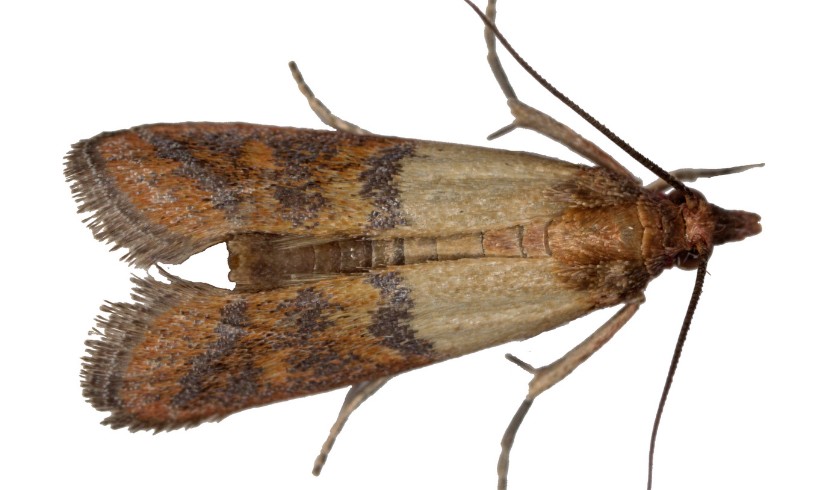
Indian Meal Moths (Plodia interpunctella) are one of the most common and economically damaging pests of stored food products worldwide. The damage is caused by the larval stage, which feeds on a wide range of dry goods, including grains, cereals, nuts, dried fruits, bird seed, and pet food. Infestations are often identified by the presence of silken webbing that contaminates food and allows the problem to spread quickly throughout pantries, kitchens, and food storage areas.
Taxonomy and Classification
Indian Meal Moths belong to the order Lepidoptera, the group that includes moths and butterflies, and to the family Pyralidae, commonly known as snout moths. Like other moths in this group, they undergo complete metamorphosis with egg, larval, pupal, and adult stages. They are generalist feeders that thrive anywhere dry human or animal food is stored. While the adult moths do not feed and are harmless on their own, their presence is a strong sign that eggs have already been laid near a suitable food source and that larvae may soon emerge.
Physical Description
The adult Indian Meal Moth is small, with a wingspan of about 1/2 to 3/4 inch. It is most easily recognized by its distinctive two-toned wings and the messy signs left behind by its larvae.
- Adult Moth (Key Identification Feature): The front third of each forewing is pale gray or yellowish, while the outer two-thirds is reddish-brown or coppery. This sharp color contrast is one of the easiest ways to identify the species.
- Larvae: The caterpillars are usually dirty white, cream, yellowish, pinkish, or pale greenish, with a brown head capsule. Fully grown larvae can reach about 1/2 inch in length.
- Location: Young larvae remain within the infested food material, but mature larvae often leave the food source and wander to walls, ceilings, shelf corners, or crevices to pupate.
- Damage Sign: Fine white silken webbing is a classic indicator of infestation. This webbing often binds grains or food particles together and may be found inside packaging, on shelves, or near the food source. Larvae, shed skins, and small cocoons may also be visible.
Distribution and Habitat
Indian Meal Moths are found worldwide and are common in any structure where dry food products are stored. They are frequently encountered in homes, grocery stores, warehouses, grain storage facilities, pet supply areas, and food processing plants. Their preferred habitat is any location where dry food is kept in paper, cardboard, thin plastic, or otherwise vulnerable packaging. Pantries, cupboards, utility rooms, and garages often provide ideal conditions for infestation, especially when food remains stored for long periods.
Behavior and Conflict
Most infestations begin when an already infested product is brought into the home from a store, warehouse, or supplier. Once established, the larvae feed and contaminate multiple nearby food items, especially if goods are stored loosely or left open.
- Contamination: The most serious problem caused by Indian Meal Moths is not just consumption of food, but contamination. Larval webbing, frass, shed skins, and pupal cocoons make stored products unsuitable for human or animal use.
- Food Preferences: These moths attack a wide range of pantry items, including flour, cereal, rice, cornmeal, crackers, pasta, nuts, seeds, dried fruit, spices, chocolate, bird seed, and pet food. Pet food and bird seed are especially common sources of overlooked infestations.
- Pupation Migration: Mature larvae often crawl away from the original food item to find a protected spot to pupate. This wandering behavior is why homeowners may notice caterpillars on walls, ceilings, or cabinet corners even when the source of the infestation is hidden.
Management and Prevention
Effective control of Indian Meal Moths relies on integrated pest management (IPM), with a strong focus on sanitation, careful inspection, removal of infested products, and proper food storage. Sprays are rarely the most effective solution indoors because the true source is almost always contaminated food.
- Inspection and Disposal:
- Inspect all dry stored foods carefully, including cereals, flour, rice, grains, pasta, nuts, spices, baking ingredients, dried fruit, pet treats, pet food, and bird seed.
- Discard any item showing webbing, larvae, cocoons, or live moths.
- Place infested materials in sealed bags and remove them from the home immediately.
- Heat or Cold Treatment: Unopened or potentially exposed products can be treated by freezing them for 4 to 7 days at 0 degrees Fahrenheit or lower. Heat treatment may also be used by warming food to about 130 degrees Fahrenheit for 30 to 40 minutes, depending on the product.
- Sanitation: Vacuum pantry shelves, corners, cracks, crevices, and shelf supports thoroughly to remove loose food particles, larvae, and cocoons. After vacuuming, wipe all surfaces with warm soapy water.
- Exclusion: Store all susceptible dry goods in airtight containers made of glass, thick plastic, or metal. This helps prevent new egg laying and keeps any small hidden infestation from spreading.
- Monitoring: Sticky pheromone traps can be used to monitor adult male moth activity and help confirm whether an infestation is still active. They are useful for detection but should not be the only control method.
Conservation and Research
Indian Meal Moths are not considered a species of conservation concern. Instead, they are studied as one of the most important stored-product pests in the world. Ongoing research focuses on improved pheromone trapping systems, safer non-toxic treatment methods for food storage facilities, better sanitation protocols, and strategies for managing resistance to commonly used storage insecticides.