Overview
Imported Cabbage Worms (Pieris rapae) are among the most common and destructive pests of vegetables in the brassica family, including cabbage, broccoli, cauliflower, kale, collards, Brussels sprouts, mustard greens, and turnips. These insects are the larval stage of the familiar white Cabbage White Butterfly, a species accidentally introduced to North America from Europe during the 1800s. Since then, they have spread across much of the world and become a major agricultural and garden pest.
Although the adult butterfly appears harmless and even attractive, the caterpillar stage is capable of causing extensive feeding damage in both home gardens and commercial crop systems. Imported cabbage worms feed aggressively on leaves, flower buds, and developing heads of brassica plants. Their chewing creates large ragged holes and contaminates produce with dark green frass (droppings), reducing both crop quality and market value.
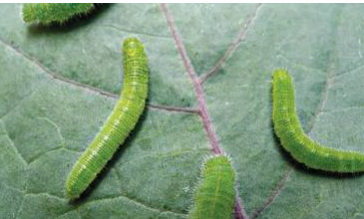
One of the reasons these caterpillars are so successful is their excellent camouflage. Their velvety green coloration blends almost perfectly with cabbage foliage, allowing them to remain hidden while feeding. Many gardeners do not notice an infestation until leaves are heavily damaged or frass accumulates throughout the plant.
Imported cabbage worms are especially problematic because they produce multiple generations each year. Adult butterflies continuously lay eggs throughout spring, summer, and early fall, resulting in overlapping populations that can persist for the entire growing season.
Fortunately, several highly effective management strategies exist, including biological controls, row covers, hand removal, and microbial insecticides such as Bacillus thuringiensis var. kurstaki (Btk).
Quick Facts
- Scientific Name: Pieris rapae
- Common Names: Imported Cabbage Worm, Cabbage Worm
- Order: Lepidoptera
- Family: Pieridae
- Main Hosts: Cabbage-family plants
- Primary Damage: Leaf chewing and crop contamination
- Active Season: Spring through fall
- Adult Form: White cabbage butterfly
- Threat Level: Major garden and agricultural pest
Taxonomy and Classification
Imported cabbage worms belong to the butterfly family Pieridae, commonly known as the white and sulfur butterflies.
- Kingdom: Animalia
- Phylum: Arthropoda
- Class: Insecta
- Order: Lepidoptera
- Family: Pieridae
- Genus: Pieris
- Species: Pieris rapae
The species was introduced from Europe and is now established across North America, Europe, Asia, Australia, and other temperate regions.
Identification
Adult Butterfly
The adult imported cabbage worm is a small white butterfly commonly seen fluttering around vegetable gardens.
- Creamy white wings
- Black wing tips
- Males usually have one dark forewing spot
- Females typically have two spots
- Wingspan around 1.5 to 2 inches
Adults fly slowly and often hover close to brassica plants while searching for egg-laying sites.
Eggs
Eggs are:
- Tiny and elongated
- Yellow to pale orange
- Laid individually
- Usually attached to leaf undersides
Eggs are often difficult to spot without careful inspection.
Larvae (The Cabbage Worm)
The caterpillar stage is responsible for plant damage.
- Velvety green coloration
- Faint yellow stripe along the back
- Soft-bodied appearance
- Approximately 1 to 1.25 inches long when mature
Their coloration provides excellent camouflage among cabbage leaves.
Pupae
Pupae are green or brown chrysalides attached to fences, stems, debris, or structures near host plants.
Habitat and Distribution
Imported cabbage worms occur almost everywhere brassica crops are grown.
Common Host Plants
- Cabbage
- Broccoli
- Cauliflower
- Kale
- Collards
- Brussels sprouts
- Turnips
- Mustard greens
- Radishes
- Bok choy
Preferred Environments
These pests thrive in:
- Vegetable gardens
- Commercial farms
- Urban gardens
- Raised beds
- Greenhouses
- Community gardens
Warm weather and continuous crop availability support rapid population growth.
Life Cycle
Imported cabbage worms undergo complete metamorphosis.
Egg Stage
Females lay eggs directly on brassica leaves shortly after mating.
Eggs hatch within several days depending on temperature.
Larval Stage
Young larvae begin feeding immediately after hatching.
This stage lasts several weeks and includes multiple molts.
Larvae consume large quantities of foliage as they grow.
Pupal Stage
Mature caterpillars form chrysalides attached to nearby surfaces.
Pupation may last:
- 1–2 weeks during warm weather
- Several months during overwintering
Adult Stage
Adults emerge and begin reproducing quickly, creating several generations annually.
Behavior and Feeding
Imported cabbage worms are highly active feeders.
Feeding Damage
- Large irregular holes in leaves
- Skeletonized foliage
- Chewed plant centers
- Damaged broccoli heads
- Contaminated cauliflower curds
Older caterpillars often move deeper into plant heads where they are difficult to detect.
Camouflage
Their green coloration makes them difficult to spot against brassica foliage.
Gardeners often discover infestations only after major damage appears.
Frass Production
Dark green droppings accumulate on leaves and inside plant heads.
This contamination reduces crop quality and marketability.
Signs of Infestation
- Ragged holes in leaves
- Green caterpillars on foliage
- Dark frass pellets
- White butterflies around crops
- Damaged cabbage heads
- Chewed broccoli florets
Impact
Garden Damage
Even small infestations can rapidly destroy leafy vegetables in home gardens.
Agricultural Losses
Commercial brassica production can suffer significant economic losses from:
- Reduced yields
- Contaminated produce
- Unmarketable crops
- Increased management costs
Plant Stress
Severe defoliation weakens plants and reduces overall productivity.
Prevention and Control
Integrated pest management (IPM) is the most effective approach.
Floating Row Covers
Fine-mesh floating row covers are one of the best prevention methods.
These covers:
- Prevent butterflies from laying eggs
- Protect crops without chemicals
- Allow sunlight and moisture through
Hand Removal
Inspect plants regularly and remove:
- Caterpillars
- Eggs
- Pupae
Hand-picking is especially effective in small gardens.
Biological Control
Natural predators and parasites help suppress populations.
Parasitic Wasps
Tiny parasitic wasps such as Cotesia glomerata attack cabbage worms naturally.
Parasitized caterpillars often display clusters of white cocoons.
Predators
- Birds
- Ground beetles
- Spiders
- Predatory wasps
Bacillus thuringiensis (Btk)
Bacillus thuringiensis var. kurstaki is a highly effective biological insecticide for caterpillar control.
Btk:
- Targets caterpillars specifically
- Is safe for humans and pets
- Does not harm pollinators
- Works best on young larvae
Applications may require re-treatment after rain or heavy watering.
Crop Rotation
Rotating brassica crops reduces long-term pest buildup.
Sanitation
Remove plant debris and old crops after harvest to reduce overwintering sites.
Interesting Facts
- The imported cabbage worm is actually a butterfly larva.
- The species was accidentally introduced from Europe.
- Adult butterflies are among the most common garden butterflies.
- The caterpillars blend perfectly with cabbage leaves.
- Multiple generations can occur every year.
- Btk is one of the safest and most effective organic controls available.
Conservation and Research
Research involving imported cabbage worms focuses on sustainable pest management and biological control strategies.
Scientists continue studying:
- Parasitoid wasps
- Plant resistance traits
- Improved biological insecticides
- Organic management techniques
- Climate influences on outbreaks
Because brassica vegetables are economically important worldwide, effective long-term management remains a major agricultural priority.