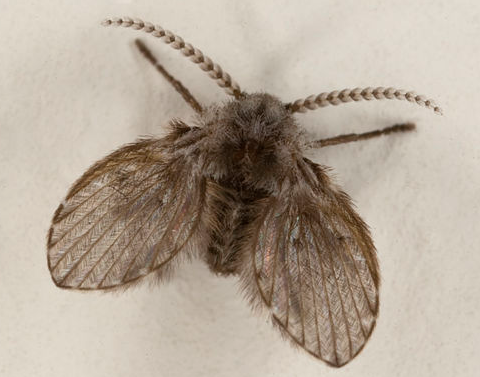
Drain Flies (family Psychodidae), also known as moth flies or sewage flies, are small, fuzzy, gnat-like insects commonly found in homes and commercial buildings. They are most often seen in bathrooms, kitchens, basements, and utility areas where moisture accumulates. These insects breed in the gelatinous organic slime that forms inside drains, sewer lines, and plumbing fixtures.
Although Drain Flies do not bite or directly transmit disease, they are considered nuisance pests because of their sudden appearance in large numbers and their association with unsanitary conditions or hidden plumbing issues.
Taxonomy and Classification
Drain Flies belong to the order Diptera (true flies) and the family Psychodidae. Many common pest species are classified within the genus Psychoda.
They undergo complete metamorphosis, progressing through egg, larva, pupa, and adult stages. Adults are weak fliers and tend to remain close to their breeding sites. They are primarily nocturnal but can often be seen resting on walls and ceilings during the day.
Physical Description
Adult Drain Flies are very small, typically measuring between 1/16 and 1/4 inch (2–6 mm) in length. They have a distinctive fuzzy, moth-like appearance due to the dense hairs covering their wings and bodies.
- Color: Black, gray, or brownish-gray
- Wings: Broad and hairy, held in a tent-like position over the body when at rest
- Flight: Weak, erratic, often short hopping movements
The larvae are small, legless, worm-like organisms, usually grayish or tan, and can grow up to about 9 mm long. They live submerged in the slimy organic film inside drains.
- Larval Feature: A breathing tube used to access air through the slime layer
- Habitat: Fully embedded in organic buildup inside pipes
Distribution and Habitat
Drain Flies are found worldwide wherever moisture and organic matter accumulate. Their preferred habitat is the gelatinous slime layer that lines:
- Sink and floor drains
- Shower and bathtub drains
- Overflow drains
- Sewer pipes and septic systems
- Condensation pans and HVAC drains
This slime consists of bacteria, fungi, algae, and decaying organic material, providing an ideal breeding and feeding environment.
Behavior and Life Cycle
Drain Flies have a rapid life cycle, typically completed in 1 to 3 weeks, allowing populations to grow quickly.
Females lay clusters of 30–100 eggs within the organic slime. After hatching, larvae feed on microorganisms and organic matter within the film. Pupation also occurs within this environment, and adults emerge from the drain opening.
Adult flies live for approximately two weeks and remain close to their breeding source. Because of their weak flight, they are often seen crawling on walls, ceilings, or near drain openings.
Feeding and Damage
Drain Flies do not damage structures, food, or fabrics. Their impact is primarily as a nuisance pest.
- Larvae: Feed on organic matter and microorganisms in drain slime
- Adults: Feed on nectar or contaminated liquids
While not dangerous, their presence can indicate:
- Accumulated organic buildup in pipes
- Standing water or leaks
- Unsanitary plumbing conditions
In sensitive environments such as hospitals, there is minor concern that they may transfer microorganisms from drains to surfaces.
Signs of Infestation
- Small, fuzzy flies resting on walls near sinks or drains
- Flies emerging from drain openings
- Increased activity in bathrooms or kitchens
- Presence of organic slime inside pipes
Infestations often appear suddenly due to rapid breeding cycles.
Management and Prevention (IPM)
Effective control of Drain Flies focuses entirely on eliminating the breeding source. Chemical insecticides alone are ineffective because larvae are protected within the slime layer.
- Mechanical Cleaning: Scrub the interior of drainpipes, P-traps, and overflow drains using a pipe brush to remove slime buildup.
- Biological Cleaners: Use enzyme- or bacteria-based drain cleaners to break down organic material safely.
- Moisture Control: Repair leaks and eliminate standing water.
- Drain Inspection: Check rarely used drains where buildup may accumulate.
- Isolation Test: Place tape over drains overnight to confirm the source (flies will stick when emerging).
Note: Boiling water, bleach, and chemical drain cleaners are generally ineffective against larvae and may damage plumbing systems.
Ecological Considerations
Drain Flies are part of natural decomposition processes, feeding on organic material and microorganisms. However, in human environments, their presence is usually associated with sanitation or maintenance issues rather than ecological benefits.
Conclusion
Drain Flies are common indoor nuisance pests associated with moist, organic buildup in plumbing systems. While they do not pose significant health risks, their presence can be unpleasant and indicates underlying sanitation or drainage issues. Through proper cleaning, moisture control, and targeted IPM strategies, infestations can be effectively eliminated and prevented.